





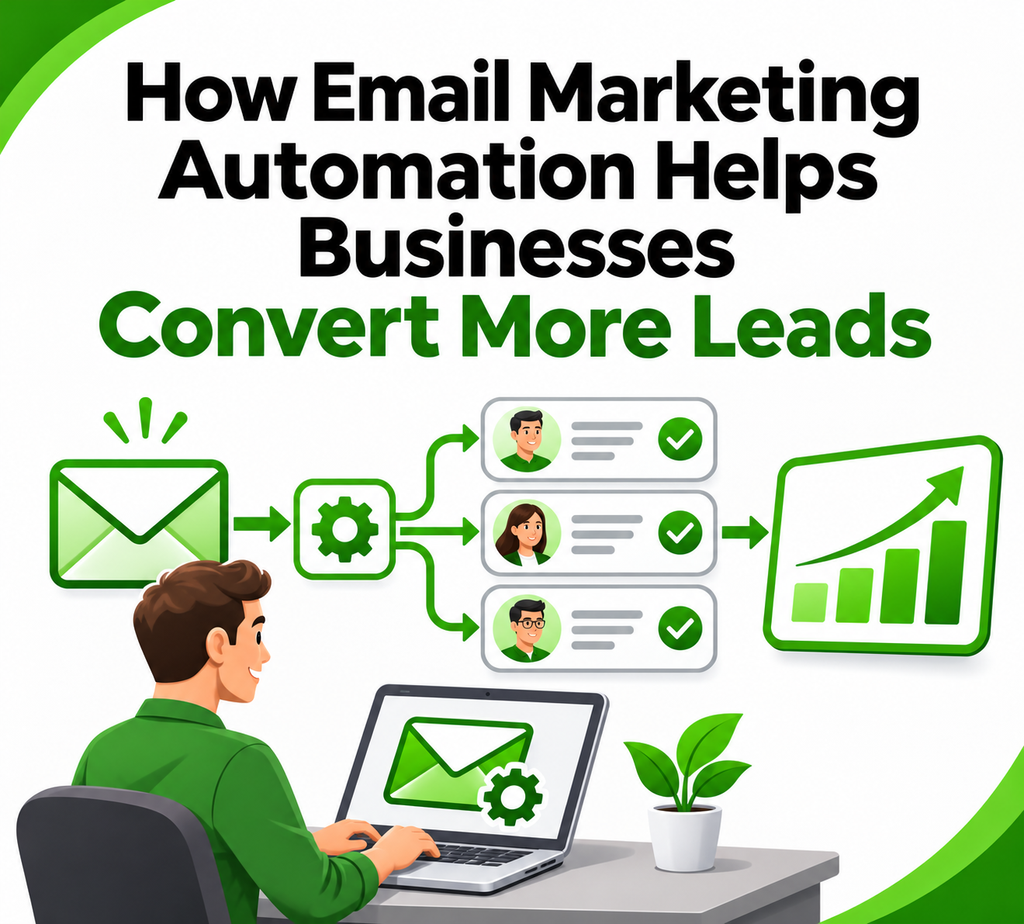
Email marketing automation helps businesses convert potential customers into paying customers through timely, personalized and relevant email communication. For businesses in Texas, including startups, small businesses and B2B companies, email automation can improve lead nurturing, customer engagement and sales opportunities.
Generating website traffic and collecting leads are important steps in business growth. However, many businesses struggle to convert those leads into actual customers. Some visitors submit inquiries but never receive a follow-up, while others lose interest because they do not receive relevant information at the right time.
This is where email marketing automation becomes valuable. It allows businesses to create automated communication journeys that keep potential customers engaged without requiring manual emails for every interaction.
What Is Email Marketing Automation?
Email marketing automation is the process of sending pre-planned and personalized emails automatically based on a subscriber’s actions, interests or position in the customer journey.
For example, when someone fills out a contact form on a Texas-based business website, they can automatically receive a welcome email. After that, the system can send relevant information, service details, helpful resources and follow-up messages.
Businesses can use email automation to:
- Welcome new subscribers and potential customers.
- Follow up with website inquiries.
- Share product and service information.
- Send promotional offers and updates.
- Recover abandoned shopping carts.
- Re-engage inactive subscribers.
- Build long-term customer relationships.
Instead of sending the same email to everyone, automation helps businesses deliver relevant messages to different audience segments.
How Email Marketing Automation Helps Businesses Convert More Leads
Email automation supports the customer journey from the first interaction to the final purchase. Here are some practical ways it helps businesses improve lead conversion.
1. Respond to New Leads Instantly
When someone submits an inquiry form, timing matters. If a business takes several days to respond, the potential customer may contact another provider.
Automated welcome and confirmation emails help businesses acknowledge inquiries immediately.
For example, a roofing company in Houston can automatically send a confirmation email when a homeowner requests a roof inspection. The email can explain the next steps and provide contact information.
This creates a professional first impression and keeps communication active.
2. Build Trust Through Lead Nurturing
Not every lead is ready to purchase immediately. Some people need additional information before making a decision.
Email automation allows businesses to educate potential customers through a sequence of helpful emails.
A lead nurturing sequence might include:
- Email 1: Welcome message and introduction.
- Email 2: Explanation of products or services.
- Email 3: Helpful tips or educational resources.
- Email 4: Answers to common customer questions.
- Email 5: Consultation invitation or clear next step.
For example, a Texas-based digital marketing company can share SEO guides, website improvement tips and case studies with subscribers interested in its services.
Businesses can also strengthen their organic visibility through a well-planned SEO strategy, helping potential customers discover relevant information before making a purchase decision.
3. Deliver Personalized Email Experiences
Customers are more likely to engage with content that matches their interests and needs.
Email marketing platforms allow businesses to personalize messages using subscriber information, previous interactions and selected preferences.
For example:
- A retail customer may receive product recommendations.
- A B2B lead may receive industry-specific resources.
- A service inquiry may receive relevant service information.
- An existing customer may receive useful updates or renewal reminders.
Personalization makes communication more relevant and helps businesses avoid sending unnecessary emails.
4. Follow Up Without Manual Effort
Many businesses lose potential customers because they do not follow up consistently.
Email automation solves this problem by scheduling follow-up messages based on predefined triggers.
For example, if someone downloads a free business guide but does not request a consultation, the system can send a relevant follow-up email after a suitable interval.
These automated follow-ups help businesses maintain communication while allowing sales teams to focus on high-intent leads.
A coordinated digital marketing strategy can further connect email campaigns with SEO, paid advertising and social media activities.
5. Recover Abandoned Shopping Carts
For eCommerce businesses, abandoned shopping carts can represent missed sales opportunities.
An automated abandoned-cart email can remind shoppers about products they added but did not purchase.
A simple sequence could include:
- A reminder shortly after cart abandonment.
- Additional product information or answers to common questions.
- A final reminder, where appropriate.
For example, an online store serving customers across Dallas, Austin and Houston can use abandoned-cart automation to encourage shoppers to complete their purchases.
The email should be helpful rather than overly promotional.
6. Segment Leads Based on Their Interests
Not every subscriber has the same requirements or buying intent.
Email segmentation allows businesses to divide their audience into smaller groups based on factors such as location, interests, customer type and engagement.
A Texas-based business could create segments for:
- New website inquiries.
- Existing customers.
- Small business owners.
- B2B prospects.
- Customers interested in specific services.
Each group can receive communication that matches its needs. This improves relevance and makes email campaigns easier to manage.
7. Measure Campaign Performance and Improve Conversions
One major advantage of email marketing automation is the ability to track campaign performance.
Businesses can monitor important metrics such as:
| Metric | What It Measures |
|---|---|
| Open Rate | Percentage of delivered emails that are opened, where tracking is available |
| Click-Through Rate | Percentage of delivered emails that receive a click |
| Conversion Rate | Percentage of recipients completing a desired action |
| Bounce Rate | Percentage of emails that could not be delivered |
| Unsubscribe Rate | Percentage of subscribers who opt out |
These insights help businesses understand which messages perform well and where improvements are needed.
For example, if an email receives clicks but generates few inquiries, the landing page, offer or call-to-action may need improvement.
Businesses should also ensure that their websites provide a smooth user experience. A well-designed and responsive website development solution can help visitors move from an email campaign to the desired conversion action.
8. Create Automated Email Workflows for Different Customer Journeys
Different customers interact with businesses in different ways. A well-designed automation workflow ensures that each lead receives relevant communication based on their actions.
Some useful email automation workflows include:
Welcome Email Workflow: When someone subscribes to a newsletter, they automatically receive a welcome email.
Inquiry Follow-Up Workflow: When a potential customer submits a contact form, they receive a confirmation email with relevant next steps.
Abandoned Cart Workflow: When a customer adds products to their shopping cart but does not complete the purchase, an automated reminder can be sent.
Re-Engagement Workflow: Subscribers who have not interacted with recent emails can receive relevant content or updates.
Post-Purchase Workflow: After a purchase, customers can receive order updates, product information and feedback requests.
These workflows should be customized according to business goals and customer expectations.
Best Email Marketing Automation Practices for Texas Businesses
Texas businesses, including small businesses, eCommerce brands and professional service providers, can improve their email marketing performance by following these practices.
1. Build a Permission-Based Email List
Email lists should be built using genuine subscribers and relevant business contacts. Avoid purchased email lists because they can create spam complaints and deliverability problems.
Subject lines should be short, relevant and connected to the actual email content.
Examples:
- Get More Leads with Smarter Digital Marketing
- Your Free Business Growth Guide Is Ready
- Ready to Improve Your Website Conversions?
3. Make Emails Mobile-Friendly
Customers also read emails on mobile devices. Use responsive email templates, readable fonts, clear images and easy-to-click CTA buttons.
4. Use One Clear Call-to-Action
Every email should have a primary objective.
Examples:
- Book a Free Consultation
- Explore Our Services
- Request a Quote
- Shop Now
- Download the Guide
Multiple competing CTAs can confuse recipients.
5. Maintain Email Marketing Compliance
Businesses sending commercial emails in the United States must follow the CAN-SPAM Act.
Important requirements include accurate sender information, non-deceptive subject lines, a valid postal address and a working unsubscribe option. Businesses must honor opt-out requests within 10 business days.
Reference: https://www.ftc.gov/business-guidance/resources/can-spam-act-compliance-guide-business
Which Email Marketing Automation Tools Can Businesses Use?
Businesses can select email marketing platforms based on their requirements, marketing budgets and automation needs.
| Platform | Best Suited For |
|---|---|
| Brevo | Email campaigns and marketing automation |
| Mailchimp | Small business email marketing |
| HubSpot | CRM and marketing automation |
| ActiveCampaign | Advanced customer journeys and segmentation |
| Klaviyo | eCommerce email and customer automation |
Before choosing a platform, evaluate its automation features, CRM integrations, reporting capabilities, contact management and pricing.
How NeoRipples Helps Businesses Improve Digital Marketing Performance
Businesses need a coordinated digital marketing strategy to attract potential customers, improve online visibility and generate qualified leads.
NeoRipples Marketing works with businesses to strengthen their online presence through digital marketing and technology solutions.
Its services include:
- Search Engine Optimization: Improve organic search visibility and attract relevant website traffic.
- Pay-Per-Click Advertising: Reach potential customers through targeted paid advertising campaigns.
- Website and App Development: Build user-friendly digital experiences that support business goals.
- eCommerce Solutions: Develop online shopping experiences for businesses.
- Creative Design: Create visual assets that communicate brand value.
- Social Media Management: Improve brand awareness and audience engagement.
By connecting website optimization, SEO, paid campaigns and customer communication, businesses can create a more effective customer journey.
Explore NeoRipples Digital Marketing Services to learn more about improving your business’s online presence.
Frequently Asked Questions (FAQs)
1. What is email marketing automation for businesses?
Email marketing automation is a process in which businesses send emails automatically through predefined triggers and workflows. It helps nurture leads, improve customer engagement and support conversions.
2. How does email automation help generate more leads?
Email automation uses welcome messages, follow-ups, educational content and personalized offers to maintain communication with potential customers. It helps guide interested leads toward an inquiry or purchase.
3. Which is the best email marketing automation tool for small businesses in Texas?
Brevo, Mailchimp, HubSpot and ActiveCampaign are popular options. The best platform depends on the business budget, contact list size, CRM requirements and automation needs.
4. Is email marketing automation suitable for B2B companies?
Yes. B2B companies can use email automation for prospect nurturing, appointment reminders, service updates, educational campaigns and sales follow-ups.
5. How can businesses measure email marketing success?
Businesses can track conversion rate, click-through rate, bounce rate, unsubscribe rate and revenue generated through email campaigns to evaluate performance.
Conclusion
Email marketing automation helps businesses maintain consistent communication with potential customers, build stronger relationships and improve sales opportunities. For Texas-based small businesses, startups and B2B companies, personalized email campaigns and well-planned automation workflows can become valuable parts of a digital marketing strategy.
Ready to improve your business’s online presence and generate more qualified leads?
Connect with NeoRipples Marketing to discuss your digital marketing goals and explore the right growth strategy for your business.